
The EU Customs Reform: A Structural Reset


May 14, 2026
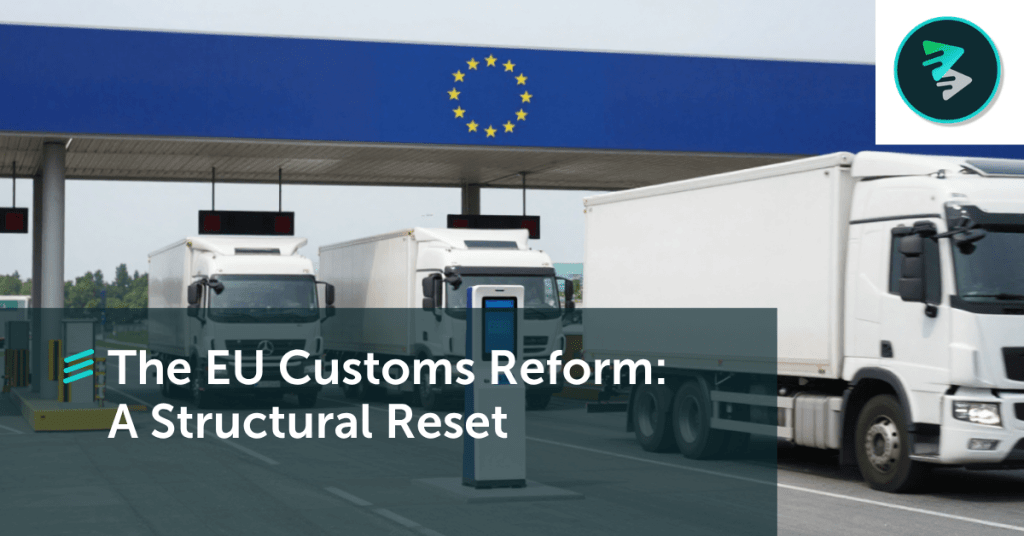
The EU customs reform isn’t a single tariff change — it’s a structural reset of European cross-border commerce. As we move toward the July 2026 implementation, we’ve been fielding a lot of questions from merchants, 3PLs, logistics operators, and industry peers. Below I share my perspective on the six questions we hear most — covering the liability inversion that makes this reform structurally different from previous tariff changes, how the EU Customs Data Hub will reshape product data requirements, the three unknowns keeping compliance teams awake, what the reform means for 3PLs and intermediaries, why enforcement will fragment across member states, and why regional fulfillment is accelerating faster than anyone projected.
For a practical breakdown of the timelines, fee structures, and what FlavorCloud is doing to handle them seamlessly for merchants, read our blog “2026 EU Customs Reform: What cross-border merchants shipping into Europe need to know“.
What are the most significant changes for both European and non-European merchants following the EU Customs Union reform?
The most significant change isn’t a tariff rate or a new fee. It’s the inversion of liability. As of July 1, 2026, ecommerce platforms and distance-selling facilitators are now classified as “deemed importers of record.” That sounds technical. Operationally, it’s seismic.
Previously, the merchant filed customs declaration. The platform was a neutral conduit. Now, the platform and all parties to transaction are jointly liable for the completeness and accuracy of product data, upfront payment for all duties, fees, and taxes, compliance with safety and regulatory standards, and the truthfulness of all customs declarations. This creates unlimited liability exposure. A platform with €1B in annual cross-border EU revenue faces potential fines of 1-6% of that import value—€10-60M annually—if compliance failures are systematic.
For European merchants, the immediate impact is cost structure bifurcation. As of July 1, 2026, the duty de minimis (€150 exemption) is eliminated; all goods are now subject to customs duty at an interim rate of €3 flat duty per HS code line item on B2C shipments under €150, plus a new EU-wide ecommerce handling fee (~€3 per package, expected November 2026), plus member-state national handling fees — France already enacted €2, Romania ~€5, Italy, Netherlands, and Belgium pending. For a merchant shipping a €45 item with 3 different SKUs to EU customers, the total duty and fee exposure is €10–15 per shipment. That’s a 22–33% cost increase.
However, European merchants shipping from the EU have a strategic advantage: they face lower or zero duty rates for intra-EU fulfillment. This is already accelerating regional fulfillment. We’re seeing European merchants relocating from US and Asia-based fulfillment to EU to avoid the new duty structure entirely.
For non-European merchants, the liability inversion creates a two-tier system. If you sell directly to EU customers, you must now register for EORI, provide complete customs data, and accept that your goods will face the €3 duty plus handling fee plus national fees. Low-AOV orders become unviable. Minimum viable order is now €80–100+ to absorb the fee structure. If you sell through an EU platform — Amazon EU, Etsy EU, Shopify — the platform is now liable, not you. But platforms will push compliance burden upstream to merchants. Merchants must now provide validated HS codes, origin certificates, and safety certifications upfront.
In practice, how will the new EU Customs Data Hub change the way merchants share and manage product and shipment data?
The EU Customs Data Hub (EUCDH) is the long-term architectural shift. It goes optional in 2031, mandatory in 2034. But the mindset shift starts now.
Currently, customs is declaration-driven: you file a form; customs reviews it; goods clear or don’t. The declaration is the source of truth. Post-EUCDH, customs will be data-driven: item-level product data becomes the source of truth. Merchants submit standardized, machine-readable data; customs authorities compare it against risk models, peer data, and historical patterns. Physical inspection becomes targeted, not random.
For merchants, this means three immediate operational changes between now and 2030.
First, product master data must be machine-readable. Currently, many merchants maintain product data in legacy systems — Excel sheets, PDFs, supplier emails. This doesn’t scale to Customs Data Hub requirements. Post-reform, product data must include HS code, declared value with justification and supporting docs, origin country with certification, safety and compliance certifications (CE, UKCA, CPSC, material safety data), allergen and ingredient disclosures where applicable, and material composition and sourcing. This data must be standardized across all platforms you sell on, updated in real-time as certifications expire and values change, auditable so you can prove where it came from, and synchronized with customs authorities.
Second, shipment data becomes pre-cleared, not post-cleared. Currently, you ship, customs inspects, and goods clear. Post-reform, you submit data, customs pre-validates, you ship, and goods clear seamlessly — if the data is clean. A late data submission means a delayed shipment, not just delayed clearance.
Third, if you sell on Amazon EU, Etsy, Shopify, and your own D2C site, you currently maintain 4 different product taxonomies. Post-reform, you need unified data. This creates pressure toward a single product information management (PIM) system, automated data sync to platforms and customs systems, and a real-time audit trail showing who changed what, when.
The EUCDH is not just a data submission system — it’s a regulatory surveillance system. Every item-level data point is logged, analyzed, and compared against peer items, price history, and declared values. Anomalies trigger automated risk scoring. Merchants and 3PLs that anticipate this architecture now and build data infrastructure accordingly will have massive competitive advantage when mandatory compliance hits in 2034.
What are the primary unknowns for businesses as they prepare for these changes?
There are three unknowns keeping the compliance teams awake right now.
The first is enforcement asymmetry across member states. The EU has harmonized the duty (€3 per HS code) and the handling fee (~€3 per package), but implementation and enforcement are fragmented. France is already live with its €2 national fee since March 2026 — enforcement is strict and documented. Romania has been live since January 2026 but implementation is uneven; some carriers enforcing, others lenient. Italy, Netherlands, and Belgium are legislated but not yet live — timing and enforcement levels unknown. Denmark, Sweden, and Germany are still developing national fee proposals. For merchants, you can’t model total landed cost accurately. You price a €50 order for Germany differently than for France. This creates pricing arbitrage opportunities and regulatory arbitrage risk.
The second unknown is Trust & Check qualification criteria, which are still being defined. The EU introduced a new “Trust & Check” compliance tier for operators with high-quality data and transparent systems. Qualified operators get lighter inspection, flexible duty payment, and priority clearance. But the actual qualification criteria are still being finalized — what data quality threshold qualifies you, what are the audit trail requirements, what happens if you fail qualification, and how often are you recertified. Merchants and 3PLs are deciding now whether to invest in Trust & Check infrastructure platforms. But without clear qualification criteria, it’s a partial bet. You might build a €500K data system only to find out you don’t meet the bar. Invest in infrastructure platforms with a high standard – 95%+ data quality, real-time audit trail – and you’ll meet any reasonable Trust & Check criteria.
The third unknown is the speed of EU Customs Data Hub integration. The EUCDH goes optional in 2031, mandatory in 2034. But the technical integration path is still unclear. The EUCDH itself might be free, but system integration could run €100K–1M. You’re deciding now how much to invest in customs data infrastructure — whether to integrate with national customs and accept it changes in 2034, or build to EUCDH spec now even though it’s not mandatory for 8 years. Work with platform providers that comply with 2034 EUCDH standards now. Data standardization is inevitable and early movers will save significantly on integration and opportunity costs later.
Will the new rules alter the role of intermediaries, such as 3PLs and cross-border platforms, in the customs process?
The new rules will destroy one category of intermediaries and resurrect another.
3PLs and customs brokers who made money on transaction volume and simple document processing will struggle. The old model was: “We process your customs docs for €2–5 per shipment. Send us the paperwork; we file it.” The new model is: “We guarantee your data quality. We validate HS codes. We verify origin. We track compliance. We’re liable if something’s wrong.” You can’t do the new model at €2–5 per shipment. Manual data validation for 50K sellers costs €500K–2M annually. You need automation with AI, which means data science, compliance expertise, and technical infrastructure. Small and mid-size 3PLs and merchants can’t afford this. They’re getting consolidated out.
The platforms that will thrive are those that transform into data stewards — and 3PLs that leverage them will propel merchants forward. A data-steward cross-border platform integrates with seller systems, auto-classifies products to HS codes, verifies origin documentation, tracks safety and compliance certifications, calculates duties and fees across 27 member states, maintains audit trail for authorities, and achieves “Trust & Check” qualification. The liability inversion means platforms must now implement data stewardship internally or outsource it to a trusted intermediary. These platforms become de facto importers of record, taking on the liability but charging accordingly — 2–3x what old-model brokers charged (€5–15 per shipment instead of €2–5) because they’re providing data infrastructure, not just document processing.
Two strategies are emerging. The largest platforms — Amazon EU, Etsy — are building compliance infrastructure in-house, with investment in the €50–200M+ range. Only the largest platforms can afford this. Everyone else is integrating with specialized trade compliance and cross-border intermediaries. The intermediaries that don’t adapt don’t survive. Those that do become more valuable and more defensible.
Despite the push for harmonization, do you expect differences in how individual EU member states implement or enforce these changes?
The EU approved harmonized duty (€3 per HS code) and handling fee (~€3 per package). But harmonization ends there.
On national handling fees, the divergence is already happening. France is at €2 per shipment since March 1, 2026. Romania at ~€5 per package since January 2026. Italy, Netherlands, and Belgium are “to be determined” — estimated €2–5 each, rolling out through 2026. By Q4 2026, you’ll have 27 different fee structures. This is intentional — each member state wants to fund its own customs infrastructure.
Implementation pace and enforcement rigor will diverge just as sharply. Germany and the Netherlands, with sophisticated port infrastructure, will implement fast and enforce strictly. Southern ports — Spain, Portugal, Greece — will see slower rollout and less consistent enforcement due to staffing and legacy systems. Eastern member states like Poland and Czech Republic will be highly variable depending on national budget priorities. A merchant routing shipments through Netherlands versus Greece will experience dramatically different outcomes. This creates de facto routing arbitrage.
Interpretation of Trust & Check will also fragment. The EU defined the concept but delegated implementation to member states and the new EU Customs Authority in Lille, France. Expect some member states to be aggressive in granting Trust & Check status — Ireland and Luxembourg are looking to attract tax and logistics entities — while others will be conservative, with France and Germany protecting domestic logistics interests. Even the definition of “data quality” will vary. Penalty severity follows the same pattern — some member states will use 1–2% as baseline; others will go 5–6%, and repeat offenders will face different treatment in each jurisdiction. Timeline variation for fee collection adds another layer — the EU said the EU-wide handling fee goes live “around November 2026,” but some member states might start in October, others might delay to January 2027, and collection mechanisms will vary between border collection and billing merchants later.
My prediction is a 12–18 month fragmentation window. By mid-2027, expect significant operational variation — smart merchants exploiting gaps by routing through lenient member states, 3PLs with multi-country experience gaining real advantage because they know the playbook, and ambitious enforcement by France and Germany creating friction. The EU Customs Authority will eventually harmonize by forcing members to align. By the end of 2027, expect more standardization. But the next 18 months will be the Wild West. This is a competitive period. Those with logistics flexibility and regulatory sophistication gain advantage. Those locked into single member-state fulfillment are disadvantaged.
Could these reforms accelerate the move toward localized or regional fulfillment within Europe? If so, how quickly might this happen?
Yes, these reforms will accelerate regional fulfillment for low AOV DTC brands. And it’s already happening faster than most projections.
The duty avoidance case is straightforward. Asia-based fulfillment means goods subject to €3 duty per HS code plus €3 handling fee plus national fees — €8–15 minimum per shipment. EU-based fulfillment means many product categories face 0% intra-EU duty. On a €40 item, duty costs €8–15 — that’s a 20–37% margin impact. Shipping from an EU warehouse costs €1–2 more but saves €5–10 in duty.
Compliance simplification is equally compelling. Shipping from Asia means multiple data handoffs — supplier, you, EU customs, then customer — with multiple failure points at each stage. Shipping from an EU warehouse means one data handoff, EU compliance only, dramatically simplified. Non-EU suppliers have complex origin documentation; EU suppliers don’t.
And the speed advantage compounds both. Asia plus EU customs processing takes 10–15 days. EU warehouse plus local delivery takes 3–5 days. Customer experience dramatically improves.
We’re already seeing nearshoring play out by category. In high-AOV categories (€100+), consumer electronics brands are expanding beyond their existing 3 hubs to 5–6 hubs, companies are accelerating EU fulfillment expansion, and luxury brands are optimizing networks to minimize duty exposure. In mid-AOV categories (€30–100), brands are expanding EU fulfillment; beauty and cosmetics brands are relocating from Asia to Eastern Europe facilities — cheaper than Western Europe with 0% intra-EU duty. In low-AOV categories under €30, most brands are exiting EU D2C or consolidating to B2B wholesale where the duty impact is lower. We are seeing a dramatic surge in B2B enablement cross border for smaller drops of inventory allowing for nimbleness.
The timeline has accelerated dramatically. Original 2024 forecasts projected significant nearshoring by 2029–2031. The actual trajectory is now through 2027 — compressed into an 18–24 month window because July 1, 2026 is imminent, Trust & Check incentives reward early movers, and competitive urgency is real.
By December 2027, expect a hub-and-spoke regional fulfillment network: UK with 4–5 major hubs, Netherlands or Belgium, Germany or Poland, Spain or Italy. This math is so compelling that it forces nearshoring, regardless of labor cost differences.
The exception is categories that won’t nearshore quickly — bulk goods where duty is a smaller percentage of cost, specialized niche items where volume is too low to justify regional infrastructure, and seasonal fast-fashion where the build-out time of 3–6 months is often longer than the selling season itself.
Final Thought
The EU Customs Union reform isn’t a single tariff change — it’s a structural reset of European cross-border commerce. The liability shift to platforms, the elimination of duty de minimis, the new Trust & Check regime, and the long-term migration to the EU Customs Data Hub create a 6-year transition period where operational excellence and data quality are the primary competitive levers. Businesses that understand this shift and prepare now — validating data, achieving Trust & Check qualification, and potentially nearshoring fulfillment — will have significant advantage by 2028. Those that treat this as a compliance checkbox will struggle. The merchants winning this transition will be those who see customs reform not as a cost problem, but as a strategic opportunity to build operational advantages their competitors can’t copy.


Grow your
Revenue
Revenue
With international sales on the rise, the opportunities have no borders. With FlavorCloud, you can tap new markets risk-free by offering global guaranteed delivery promises. Go global today.